






Shape the future with sustainable technology! Reduce electronic waste with repairable products, live environmentally conscious. Discover more!
Buy, Use, Dispose… What Then? A Journey into Sustainable Technology
Hello friends, I’m sure you, like me, glance at every new device that comes out and wonder, “Should I buy it?” Smartphones, laptops, headphones… they’ve become an indispensable part of our lives, right? But have you ever thought about where such rapid consumption is leading us? When a device gets old or breaks, what do we do? We usually buy a new one, throw the old one in a drawer, and forget about it. This is precisely where I want to address a very important topic with you today: sustainable technology products, meaning repairability and eco-friendly choices.
So Why Has Repairing Become Torture?
Now, let’s be honest, most of us have experienced this. The screen of your new phone breaks, or your three-year-old laptop starts to slow down, and before you know it, buying a new one seems more sensible than getting it repaired. Of course, another reason for this is the very high cost we pay for repairs. Because repair prices are exorbitant, spare parts are hard to find, and sometimes we even encounter the answer, “it cannot be repaired due to its design.” As frustrating as it is, we can say that this situation is turning our world into a frustrating place too. Every year, we produce tons of e-waste, and these wastes can remain in nature for centuries without decomposing; the dangerous substances within them mix with soil and water. So, it’s not wrong to say that we’re both spending money and destroying the planet.
The Way Out of the Vicious Cycle: What is Repairability?

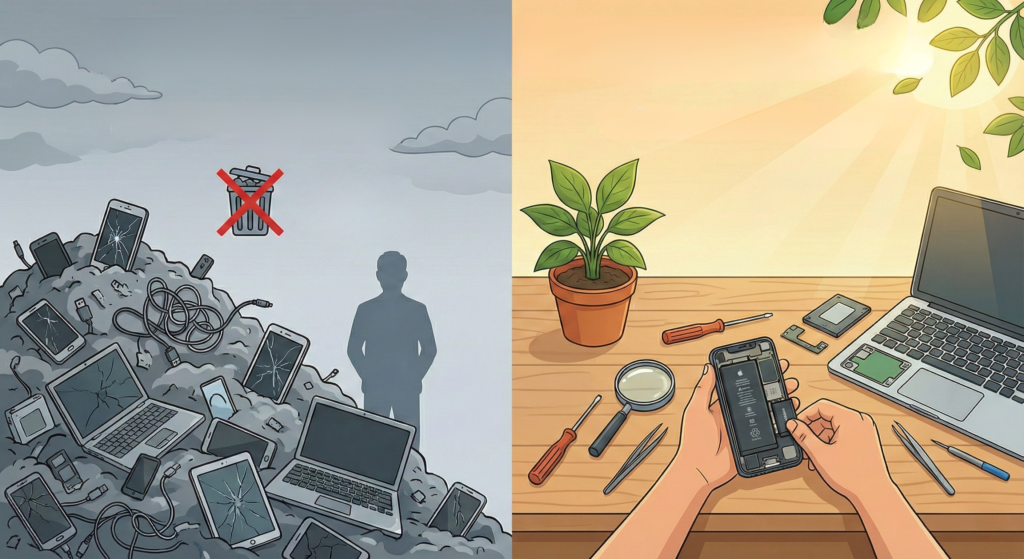
So, if you’re asking how we can break free from this vicious cycle, that’s where sustainable technology, and specifically the concept of “repairability,” comes in. Repairability means that when a product malfunctions, it can be easily, affordably, and, if possible, repaired by the end-user. In short, to achieve this, it means being able to continue using your phone by simply replacing its battery when its life decreases, upgrading your laptop’s RAM, or easily having a new screen installed if it breaks. You might be wondering, well, what exactly is this? It’s actually not that complicated.
DIY Freedom
Some companies have even started to adopt this philosophy when designing their products. We see modular designs, meaning different parts of the device can be replaced independently. The easy availability of spare parts and public repair guides can also be cited as another reason for this. Some brands even send repair kits with their products. Thinking about this, how wonderful it would be to be able to repair your own device with a small screwdriver set! This not only saves us money but also helps us form a stronger bond with a device. Instead of discarding our device, as we extend its life, that product can become more meaningful to us.
Repair Alone Isn’t Enough: From Materials to Energy, ‘True’ Green Technology
Of course, sustainability is not limited to repairability; a product’s environmental friendliness depends on many other factors. What are these, you ask? For example, the materials used in its production. Wouldn’t it be wonderful to see products made with recycled plastics, metals, or even materials derived from waste collected from the ocean? What do you think? Additionally, the energy efficiency of the product is very important. A television or computer that consumes less electricity not only reduces our electricity bill but also significantly lowers our carbon footprint. Choosing companies that use renewable energy sources in their production processes and ensure ethical working conditions also contributes to the overall picture, of course, but to do these, we need to move away from the impositions of popular culture a bit.
A Repairable Future is Possible: Our Role as Consumers

So, what can we do as consumers? First and foremost, we must make conscious choices. Before buying a product, doing a little research and examining the brand’s sustainability policies is no longer as difficult as it used to be. Many online resources list products’ “repairability scores” or eco-friendly features.
Brands like “Fairphone” are already pioneers of this philosophy, but major brands are also slowly starting to take steps in this direction. Paying attention to product boxes and packaging is also important. Instead of unnecessarily large boxes and single-use plastic packaging, we can support brands that prefer recycled and minimal packaging.
I know, these types of products might seem a bit more expensive at first. Because quality materials, modular design, and ethical production processes can be costly. But when we think long-term, a more durable, repairable product is much more economical than constantly buying new ones. Moreover, in this way, you invest in both your own budget and our planet. We have a responsibility to leave a cleaner world for future generations, don’t we?
The Future Lies in Our Choices
This change won’t be easy, of course, but through the conscious steps of each of us, we can create a significant impact. We need to convey the message to companies loudly: “We want repairable and eco-friendly products!” As our demand for sustainable products increases, it’s certain that major brands will start investing more in this direction. Of course, for supply and demand, it’s essential that we provide feedback to brands by using these eco-friendly technology products. Come on, let’s take more thoughtful, greener steps on this technology journey. The future lies in our choices!
You can share your opinions and suggestions about the news in the comments section below.


